Respiratory virus season should not be a surprise. Every year, influenza, respiratory syncytial virus (RSV), COVID-19, and other respiratory illnesses place pressure on families, workplaces, schools, healthcare systems, and communities. CDC states that respiratory viruses are responsible for millions of illnesses and thousands of hospitalizations and deaths in the United States each year. The good news is that you and others can take steps now, before cold and flu season and RSV season reach their peak.
Do Not Wait Until Everyone Is Sick
One of the biggest mistakes we could make is figuring out respiratory protection after illness starts increasing. By then, supplies may be harder to obtain, employees may already be out sick, and healthcare facilities may be dealing with increased patient cases. Preparation can begin before the season is in full swing. CDC makes the same point about vaccines, noting that vaccines take time to work and that getting vaccinated before viruses start spreading in your community is best.
Build a Layered Prevention Strategy
There is not one single action that prevents every respiratory infection. CDC recommends a combination of prevention strategies. CDC describes core prevention strategies as practices recommended for everyone: staying up to date with recommended immunizations, practicing good hygiene such as regular handwashing and cleaning commonly touched surfaces, taking steps for cleaner air, and staying home and away from others when sick. CDC then lists masks, physical distancing, and testing as additional prevention strategies that add an extra layer of protection.
Layering works because no single strategy covers every situation. Cleaner air helps in a shared waiting room, hand hygiene helps at the check-in counter, and a mask adds protection during close, face-to-face care. When one layer has a gap, the next layer is still in place.
Preparation Steps for Workplaces and Healthcare
Organizations carry extra responsibility because employees, patients, and visitors share the same air and surfaces. For workplaces and healthcare facilities, preparation may also include the following steps:
- Checking communication-accessible PPE
- Reviewing respiratory protection policies
- Evaluating ventilation, including HEPA and antimicrobial options
- Establishing procedures for symptomatic employees and patients
- Identifying high-risk situations
- Making high-quality masks or respirators readily available
CDC supports the last item directly, encouraging organizations to provide free, high-quality masks to their workforce or visitors in times of higher respiratory viral spread. Stocking those masks in advance, and choosing products that keep the face visible, lets an organization act on that guidance the day illness starts climbing instead of waiting on a backorder.
When Should Masks Be Part of Your Cold and Flu Season Plan?
CDC identifies masks as an additional prevention strategy that can be particularly useful when respiratory viruses are causing a lot of illness in your community, following an exposure, when someone is sick or recovering, and when you or the people around you have risk factors for severe illness. CDC also notes that you may not know the health condition or risk status of the people around you, and in that situation the most protective option is choosing additional strategies such as masking.
Different Masks Offer Different Levels of Protection
Different masks and respirators provide various levels of protection, and fit matters. CDC explains that cloth masks generally offer lower levels of protection, surgical and disposable masks usually offer more, international filtering facepiece respirators such as KN95s offer even more, and NIOSH Approved filtering facepiece respirators such as N95s are the most protective. Gaps around the edges let air leak in and out, so CDC suggests checking fit by cupping your hands around the outside edges of the mask and feeling for warm air coming through the front.
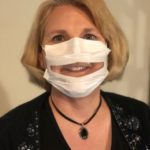
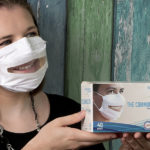
The Communicator™ procedural face mask is available in ASTM Level 1 and ASTM Level 3. Both versions are FDA cleared and both include an anti-fog clear window, so teams can match the mask rating to the task without giving up facial visibility.
Do Not Forget Communication
Respiratory protection can create communication accessibility problems. A traditional opaque mask may protect against respiratory hazards while blocking important facial information. For people who are visual communicators, Deaf or hard of hearing, or on the autism spectrum, this barrier can interfere with communication comprehension. The solution is not necessarily to remove the mask. The solution is to make accessible PPE part of the preparedness plan.
Healthcare facilities, dental offices, schools, businesses, and other organizations can consider keeping clear-window masks available for situations where facial visibility is important. CDC respiratory virus guidance itself notes that federal civil rights laws may require reasonable modifications or reasonable accommodations, and that nothing in the guidance supersedes those laws.
Prepare Your Facility Now
A short self-audit shows where a facility stands today. Ask yourself these questions before respiratory illness begins to climb in your area:
- Do we have enough communication-accessible PPE?
- Do employees know what to use and when?
- Do we have appropriate respiratory protection for higher-risk situations?
- Can we communicate effectively with people who rely on visual communication?
- Do we have a plan if respiratory illnesses begin to increase rapidly?
These questions are easier to answer and address when there is not an emergency. A facility that answers no to any question has a clear starting point, whether that means placing an order, updating a policy, or scheduling staff training. Ordering by the case can also lower cost, since Safe‘N’Clear automatically applies a 10 percent savings on cases of ASTM Level 1 masks and an 11 percent savings on cases of ASTM Level 3 masks. The Safe‘N’Clear purchase guide walks through ordering options.
Preparation Is a Form of Protection
You do not have to wait for a major outbreak to secure respiratory protection. Build your plan now, stock the supplies your organization may need, train your team, review your policies, and make accessibility part of the conversation from the beginning. Safe‘N’Clear, Inc. helps healthcare systems and facilities prepare for respiratory protection designed with a focus on communication accessibility, supplying FDA cleared, ADA effective clear-window face masks for healthcare, dental care, and everyday use.
Do not wait for respiratory illness to disrupt your workplace or healthcare facility. Prepare now by reviewing how clear face masks balance protection and communication during respiratory illness season, then contact Safe‘N’Clear to stock clear-window masks before cold and flu season reaches your community.