The right nursing mask is an FDA-cleared surgical mask with an ASTM F2100 protection level matched to the task, a fit that stays comfortable through a long shift, and ideally a design that lets patients see the nurse’s face. Nurses move between low-risk conversations and procedures with splash risk many times a shift, so a single mask rarely fits every moment. This guide explains what separates a surgical mask from a respirator, how ASTM Level 1 and Level 3 differ, and why visible faces matter for patient communication. You will also see how The Communicator™ from Safe’N’Clear fits into a nursing unit’s mask supply.
Key Takeaways
Surgical masks and N95 respirators do different jobs, and the FDA regulates them differently. ASTM F2100 sorts surgical mask materials into Level 1, Level 2, and Level 3, with fluid resistance rising from 80 to 160 mm Hg. Most units need more than one level, chosen task by task under the facility’s infection prevention policy. Clear window surgical masks keep the nurse’s mouth visible, and a 2017 audiology study found that listeners with hearing loss understood more speech in noise when the talker wore a transparent surgical mask.
What Makes a Good Nursing Mask?
A good nursing mask meets regulatory requirements first and comfort and communication needs second. The U.S. Food and Drug Administration describes a surgical mask as a loose-fitting, disposable device that creates a physical barrier between the wearer’s mouth and nose and potential contaminants in the immediate environment. The FDA also notes that surgical masks do not provide complete protection from germs because of that loose fit, which is why respirators exist for airborne hazards. For tasks that call for a surgical mask, the practical questions are which ASTM level the task requires, whether the mask stays comfortable through a 12-hour shift, and whether patients can still understand the nurse wearing the mask.
Surgical Mask vs. N95 Respirator for Nurses
Surgical masks and N95 respirators are regulated differently because they do different jobs. According to the FDA’s overview of N95 respirators and surgical masks, N95 respirators provide respiratory protection to the wearer, while surgical masks provide fluid barrier and particulate material protection. A nurse caring for a patient on airborne precautions follows the facility’s respiratory protection program and wears the respirator that program specifies. A surgical mask, including a clear window surgical mask, is not a substitute in that situation.
ASTM Level 1 vs. Level 3: Matching the Mask to the Task
ASTM F2100 is the standard specification for the performance of materials used in medical face masks, and the standard sorts masks into Level 1, Level 2, and Level 3. A State of California bid specification for surgical masks summarizes the levels by expected exposure, from low-risk situations at Level 1 to heavy possible exposure at Level 3. The table below compares the minimum performance requirements for each level as listed in that specification.
| Requirement |
Level 1 |
Level 2 |
Level 3 |
| Intended exposure |
Low risk, no expected fluid, spray, or aerosol |
Light or moderate aerosol, fluid, and spray |
Heavy possible exposure to aerosol, fluid, and spray |
| Fluid resistance (synthetic blood) |
80 mm Hg |
120 mm Hg |
160 mm Hg |
| Bacterial filtration efficiency (BFE) |
95% minimum |
98% minimum |
98% minimum |
| Particulate filtration efficiency at 0.1 micron |
95% minimum |
98% minimum |
98% minimum |
Fluid resistance is the clearest practical difference between the levels. A Level 3 mask must resist synthetic blood at twice the pressure of a Level 1 mask, which aligns Level 3 with procedures that may produce heavy splash. Your facility’s infection prevention policy decides which level each task requires, and the Safe’N’Clear healthcare mask page explains how each Communicator™ level maps to common settings.
Why Visible Faces Matter on a Nursing Unit
Nursing is a communication job, and a standard surgical mask hides the mouth and much of the face. Researchers at the University of Arkansas at Little Rock, writing in the Journal of the American Academy of Audiology in 2017, tested speech understanding in background noise with 31 adults, including listeners with moderate and severe-to-profound hearing loss. Both groups with hearing loss understood more speech when the talker wore a transparent surgical mask, and the transparent mask did not lower performance for listeners with normal hearing. The finding matters on any unit where alarms, equipment, and conversations compete with patient teaching.
Visible faces also help Deaf nurses work alongside hearing colleagues. The Ohio State University Wexner Medical Center reported in July 2024 that the interpreter and sometimes the coworkers of Casey King, a Deaf ICU nurse, wear masks with clear plastic around the mouth so she can read their lips. The same mask that helps patients therefore helps staff, which makes the choice a unit-level decision rather than an individual one.
How The Communicator™ Fits a Nursing Mask Supply
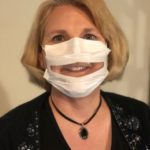
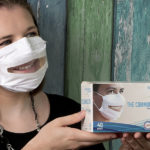
Safe’N’Clear, Inc. supplies The Communicator™, an FDA-cleared, ADA-effective surgical face mask with a fog-resistant clear window, available in ASTM Level 1 and ASTM Level 3. FDA 510(k) records show the Communicator Surgical Facemask with Clear Window cleared under number K152561 on June 3, 2016. Safe’N’Clear describes the mask as latex-free and hypoallergenic and states that The Communicator™ is 100 percent sourced and manufactured in the United States. For a unit where nurses care for Deaf patients, older adults, or anyone who relies on lipreading, The Communicator™ solves the problem of an opaque mask hiding every instruction.
Many units stock both levels. Level 1 can cover tasks with no expected fluid or spray exposure, such as patient teaching, and Level 3 covers procedures where the infection control policy calls for maximum fluid resistance. Safe’N’Clear applies a 10 percent discount automatically to Level 1 case orders and an 11 percent discount to Level 3 case orders. Compare the ASTM Level 1 Communicator™ with the ASTM Level 3 Communicator™, and see Safe’N’Clear’s article on nephrology nurses and The Communicator™ for a specialty example.
Frequently Asked Questions
Is a surgical mask enough protection for nurses?
A surgical mask is the right protection for many nursing tasks but not for airborne hazards. The FDA describes surgical masks as loose-fitting barriers that provide fluid and particulate protection, while N95 respirators provide respiratory protection. Nurses should follow the facility’s infection prevention policy, which specifies when a surgical mask is enough and when a fit-appropriate respirator is required instead.
What ASTM level mask should nurses wear?
The right ASTM level depends on the task rather than the job title. Under ASTM F2100, Level 1 masks suit low-risk situations with no expected fluid or spray, Level 2 masks handle light to moderate exposure, and Level 3 masks are for heavy possible exposure to fluid, spray, or aerosol. Many nursing units stock Level 1 for routine care and Level 3 for procedures with splash risk.
Can nurses wear a clear window mask during procedures?
Nurses can wear a clear window surgical mask during procedures when the mask carries the ASTM level the procedure requires. Safe’N’Clear states that The Communicator™ is intended for use in the operating room as well as dental, isolation, and other medical procedures, and the mask is available in ASTM Level 1 and ASTM Level 3. Facility policy still decides which level each procedure needs.
Conclusion: Choose Nursing Masks Task by Task
The best nursing mask is the one cleared by the FDA, rated for the task in front of the nurse, comfortable enough to keep on, and clear enough to keep patients informed. Stock Level 1 for routine care, Level 3 for splash-risk procedures, and respirators for airborne precautions. To set up a supply for your unit, review box and case options in the Safe’N’Clear purchase guide and order The Communicator™ in the levels your nurses need.