National Disability Employment Awareness Month (NDEAM) is observed each October to recognize the contributions of workers with disabilities, and the U.S. Department of Labor set the 2026 theme as Celebrating Value and Talent. For employers with Deaf or hard-of-hearing staff, one practical way to act on that theme is to look at the equipment people wear every day. A standard mask hides the mouth and face, which shuts out coworkers who read lips. This article covers the history of NDEAM, what EEOC guidance says about accommodations for hearing disabilities, and how clear window masks fit into an inclusive workplace.
Key Takeaways
NDEAM traces back to a national week Congress designated in 1945 and became a full month in 1988, and the Department of Labor’s Office of Disability Employment Policy has led the observance since 2001. The 2026 theme, Celebrating Value and Talent, carries the 2025 celebration forward in honor of America’s 250th birthday. EEOC guidance lists interpreters, captioning, assistive listening devices, written notes, and lighting that supports lipreading among common accommodations for hearing disabilities. In workplaces that require masks, clear window masks remove a barrier that individual accommodations alone cannot fix.
What Is National Disability Employment Awareness Month?
NDEAM is an October observance that highlights the skills and contributions Americans with disabilities bring to workplaces, communities, and the economy. According to a May 26, 2026 Department of Labor announcement, the observance began in 1945, when Congress designated a national week to recognize the contributions of Americans with physical disabilities. Congress expanded the week to a month in 1988 and named the month NDEAM to cover disabilities both apparent and nonapparent. When Congress established the Office of Disability Employment Policy in 2001, the office took charge of leading NDEAM and selecting an annual theme.
What the 2026 NDEAM Theme Means for Employers
The 2026 theme, Celebrating Value and Talent, continues the spirit of the 2025 celebration in honor of America’s 250th birthday, according to the Department of Labor. Julie Hocker, Assistant Secretary of Labor for Disability Employment Policy, said, “This year’s theme honors the value and talent of disabled Americans, past and present.” For employers, honoring value and talent means removing the barriers that keep qualified people from contributing fully, and communication barriers are among the most common for Deaf and hard-of-hearing workers.
Accommodations for Deaf and Hard-of-Hearing Employees
A reasonable accommodation is an adjustment or modification that enables an applicant or employee with a disability to enjoy equal employment opportunity, unless the change would cause undue hardship, meaning significant difficulty or expense. The EEOC’s resource on hearing disabilities, issued January 24, 2023, lists sign language interpreters in person or by video remote interpreting, communication access real-time translation, captioning software, assistive listening devices, and written notes for brief routine exchanges. One EEOC example describes an employee who reads lips asking for a seat near the trainer, closed captioning, and adequate lighting during orientation. Read the full EEOC guidance on hearing disabilities in the workplace.
The guidance also covers how requests work and how far the obligation reaches. An employee does not need special words to request an accommodation, and the employer should use an interactive process, meaning a dialogue with the employee, when more information is needed. Accommodations extend to the benefits and privileges of employment, including training and employer-sponsored social events. The EEOC also notes that employers do not have to provide personal use items such as hearing aids, which is one reason workplace-level changes matter.
Where Masks Fit in an Inclusive Workplace
In workplaces that require masks, the barrier sits on everyone else’s face. An employee who reads lips cannot follow a colleague behind an opaque mask, and no individual accommodation fixes that unless the people around the employee change what they wear. A 2017 study in the Journal of the American Academy of Audiology found that listeners with hearing loss understood more speech in background noise when a talker wore a transparent surgical mask, and the transparent mask did not reduce understanding for listeners with normal hearing. Clear window masks therefore help the whole team, not only the person who requested support.
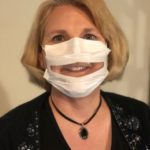
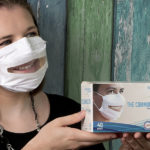
Safe’N’Clear, Inc. supplies The Communicator™, an FDA-cleared, ADA-effective surgical face mask with a fog-resistant clear window, in ASTM Level 1 and ASTM Level 3. Safe’N’Clear is a woman-owned small business and a disability-owned business, and The Communicator™ exists to solve the exact problem an opaque mask creates for Deaf and hard-of-hearing workers. Employers outside healthcare can read Safe’N’Clear’s guidance on wearing masks in the workplace and choosing PPE for a customer-facing workforce.
Four NDEAM Actions for Employers
October is a natural time to review how a workplace supports employees with hearing disabilities. The actions below are recommendations, and each one connects to EEOC guidance or to the communication research above.
Review the Accommodation Process
Check that employees know how to request an accommodation and that managers know how to respond. The EEOC points employers to the Job Accommodation Network, a free and confidential service that provides information on accommodations for specific needs. A written procedure shared with every employee also reduces confusion when a coworker receives an accommodation.
Audit Communication Barriers
Walk through a typical day and note every moment that depends on hearing alone, such as public address announcements, phone-only scheduling, or meetings without captions. One EEOC example describes an employer providing a smartphone so a deaf employee receives text messages instead of announcements over a public address system. Small fixes like that one often cost little and help many employees.
Train Managers and Teams
Training helps managers handle requests and helps coworkers communicate directly. Safe’N’Clear’s article on inclusive hiring and onboarding with clear face masks covers how communication access fits into the first weeks of employment, when new hires form impressions of the workplace.
Equip Teams With Clear Masks Where Masks Are Required
When masks are part of the job, choose masks that keep faces visible. A clear window surgical mask with the right ASTM level lets a whole department stay protected and understandable at the same time. Safe’N’Clear’s business solutions page outlines options for employers.
Conclusion: Celebrate Value and Talent With Visible Communication
NDEAM asks employers to recognize the value and talent workers with disabilities bring, and the 2026 theme makes that message explicit. For Deaf and hard-of-hearing employees, visible faces, clear accommodation procedures, and trained managers turn that recognition into daily practice. If your workplace requires masks, shop The Communicator™ clear window masks and save automatically when you order by the case.