Healthcare has changed dramatically over the past several years. One factor has not changed: prioritizing infection prevention. Masking in healthcare remains one of the tools facilities use to protect patients and staff, and masks work best as part of a broader plan. Respiratory viruses can place significant pressure on healthcare, particularly when community transmission increases.
CDC infection-control guidance, including the CDC recommendations for measles in healthcare settings, identifies measures such as ventilation, masking, vaccination, hand hygiene, screening, and isolation as tools healthcare facilities can use. The conversation about masks, however, does not have to be all or nothing.
Masking in Healthcare Is One Tool in a Larger Strategy
A mask or respirator is only one component of infection prevention. Healthcare facilities can also consider the following measures, each of which addresses a different part of the risk:
- Ventilation
- Hand washing and sanitizing hygiene
- Environmental cleaning
- Vaccination
- Screening
- Isolation procedures
- Quality surgical-grade PPE
- Staff education
- Respiratory protection programs
- Communication accessibility
Communication accessibility belongs on that list for a practical reason. Every other measure depends on people understanding instructions, from a patient asked to keep a mask on in the waiting room to a staff member learning a new isolation procedure.
CDC describes respirators as part of comprehensive respiratory protection programs. For healthcare workers, N95 respirators provide a higher level of respiratory protection than loose-fitting surgical masks when properly fit-tested and used. Those programs follow the OSHA Respiratory Protection Standard, 29 CFR 1910.134, and include medical clearance, fit testing, and training. A surgical face mask such as The Communicator™ ASTM Level 3 still has an important role in procedures that call for a fluid-resistant barrier rather than a respirator.
Infection Control and Communication
Another question healthcare leaders should be asking is what happens to communication when everyone puts on a mask. For patients, staff members, and families, facial visibility is an important part of communication understanding and comprehension. A patient who cannot follow discharge instructions or an isolation request is a patient who may not comply, even with the best intentions.
What the ADA Requires
The Americans with Disabilities Act of 1990 (ADA) recognizes that people who are Deaf or hard of hearing use a variety of communication methods and that covered entities must provide effective communication. The appropriate aid or service depends on the circumstances and the individual’s communication needs. U.S. Department of Justice guidance on effective communication explains that the key is to consider the nature, length, complexity, and context of the communication along with the person’s normal method of communication. The same guidance offers a healthcare example, noting that a doctor’s office generally will need an interpreter to take the medical history of a patient who uses sign language or to discuss a serious diagnosis and treatment options.
Effective communication rules also extend to companions, such as a spouse or family member with a communication disability who needs to understand a patient’s condition. Infection-control planning and accessibility planning therefore should not operate in separate silos.
Make Accessible PPE Part of the Plan
Clear-window masks fit best in the moments when understanding the speaker matters most. Healthcare facilities can have clear-window masks available for situations where facial visibility supports communication comprehension and patient compliance, such as:
- Patient intake and registration
- Primary care
- Pediatric care
- Dental appointments
- Audiology and ENT
- Mental health
- Rehabilitation
- Patient education
- Family discussions
- Patient-facing healthcare roles
A clear mask is not a substitute for an interpreter or another auxiliary aid when one is required. Instead, a clear mask can be one tool within a broader communication-accessibility strategy. Check the patient’s electronic medical record for communication preferences and accommodations before the visit begins, so the right combination of tools is ready. Dental teams can read more about how dental offices can meet ADA effective communication standards with clear masks.
Give Your Team Options
Healthcare facilities already plan for different patient needs, and respiratory protection should be no different. A well-planned PPE strategy can include the appropriate equipment for different situations while supporting how staff will communicate with patients and colleagues. A practical lineup might pair NIOSH-approved respirators for Airborne Precautions with FDA cleared clear-window surgical face masks for intake, patient education, and routine procedures. For a rollout plan, see implementing clear-window masks in healthcare settings, step by step.
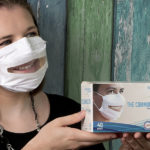
At Safe‘N’Clear, infection control and communication accessibility belong in the same conversation. Safe‘N’Clear, Inc. supplies The Communicator™ procedural face mask in ASTM Level 1 and ASTM Level 3, giving facilities FDA cleared, ADA effective protection that keeps the face visible for patients who rely on lipreading and facial expression.
Protect the Patient. Protect the Healthcare Worker. Preserve the Communication Process.
Masking in healthcare works best when protection and communication are planned together. Contact Safe‘N’Clear about clear PPE solutions for your organization, or review Safe‘N’Clear clear-window mask protection for healthcare to compare options for your facility.