A dental practice qualifies as a place of public accommodation under Title III of the Americans with Disabilities Act, which means ADA effective communication is a legal obligation, not an optional courtesy. For patients who are Deaf, hard of hearing, or otherwise rely on visual communication cues, a standard opaque mask can turn a routine cleaning or consultation into an encounter where instructions, consent discussions, and post-procedure care go misunderstood. This guide walks through what ADA effective communication actually requires of a dental office and how clear masks fit into meeting that standard.
Safe’N’Clear, Inc. supplies FDA cleared, ADA effective clear masks through The Communicator™ Procedural Face Mask, giving dental practices a practical way to support both infection control and the communication access Title III requires. The full Safe’N’Clear healthcare PPE line covers both filtration levels for practices standardizing across every operatory.
What ADA Effective Communication Requires of Dental Practices
The Department of Justice’s guidance on effective communication under the ADA defines the standard clearly: a covered entity, including a private dental practice, must ensure that communication with patients who have vision, hearing, or speech disabilities is as effective as communication with patients who do not. Dental offices fall squarely within this requirement, since dentists are explicitly named among the health care providers covered under Title III, alongside physicians, optometrists, and other private practitioners.
Meeting that standard means considering the nature, length, and complexity of each communication and the patient’s own method of communicating, rather than applying a single fix across every visit. A brief scheduling conversation may require less accommodation than a consent discussion about a root canal or extraction, where the stakes of a misunderstanding are considerably higher. Auxiliary aids and services, from qualified interpreters to visual communication tools, are the mechanism the ADA uses to close that gap, and the ADA National Network’s health care fact sheet confirms that dentists’ offices are explicitly included among the health care facilities this requirement covers.
Where Communication Barriers Show Up in a Dental Visit
Dental care involves several points where communication quality directly affects patient safety and outcomes. A hygienist explaining a cleaning or discussing findings with a masked face limits how much a Deaf or hard-of-hearing patient can follow through lip reading and facial expression. A dentist walking a patient through treatment options and obtaining informed consent before a procedure needs the patient to fully understand what is being proposed, a conversation where a muffled, half-hidden face increases the risk of a genuine misunderstanding rather than a minor inconvenience. Oral surgery consultations carry similar stakes, often covering sedation options, risks, and post-procedure instructions the patient must retain and follow at home.
Pediatric dental patients and patients with cognitive or developmental disabilities also depend heavily on facial expression to gauge whether a moment is safe, independent of their hearing status. Elderly patients experiencing age-related hearing loss, a population dental practices see regularly, often struggle to compensate for a masked, muffled voice even when they do not identify as Deaf or hard of hearing.
How Clear Masks Support ADA Effective Communication
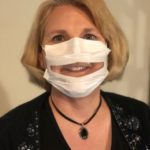
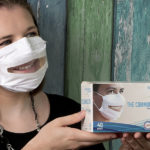
A clear window mask directly addresses the auxiliary aid concept at the center of ADA effective communication, since keeping a practitioner’s mouth and facial expression visible restores a channel that opaque masks remove. Safe’N’Clear offers The Communicator™ Mask in both ASTM Level 1, appropriate for cleanings, exams, and most routine dental work, and ASTM Level 3, suited to oral surgery and procedures involving spray from a handpiece. Both options let a dental office maintain the same infection-control standard already in place while adding a communication benefit that supports the ADA’s effective communication requirement.
A clear mask is not, on its own, a complete accommodation plan. A patient who primarily communicates in sign language may still need a qualified interpreter for a complex consent conversation, regardless of whether the dentist wears a clear or opaque mask. What a clear window mask does is remove one of the most common, everyday barriers a masked dental visit creates, making every other communication tool the practice uses, from an interpreter to written materials, work better because the patient can also see the provider’s face throughout the interaction.
Building an Accommodation Process for Your Practice
A dental office meeting its ADA obligations consistently, rather than reactively, benefits from a documented process staff can follow without guesswork. Front desk staff should be trained to ask new and returning patients whether they need a communication accommodation during intake, rather than waiting for a patient to raise the issue mid-appointment when options are more limited. Clinical staff should know which masks are stocked at which ASTM level and understand that a clear window option is available and appropriate for the vast majority of patient encounters, not reserved for exceptional cases. Practices that already use The Communicator™ across clinical staff can extend that same visible-communication standard to every patient interaction by default, rather than treating clear masks as a special accommodation pulled out only when a patient specifically requests one.
Documenting how a practice handles communication accommodations, including which auxiliary aids are available and how staff are trained to offer them, gives a dental office a clear record if a patient’s need is ever questioned and reinforces consistent practice across a multi-provider office. A practice manager reviewing this process annually, alongside other staff training requirements, keeps the accommodation plan current as staff turn over and as new communication technologies become available.
Documenting Compliance Through Patient Records
Dental practices that bill for enhanced communication or infection-control measures should understand how those choices intersect with clinical documentation. A closer look at how CDT codes apply to clear mask use in dental practices covers how a practice can document PPE choices alongside patient care records in a way that supports both compliance and appropriate billing.
Frequently Asked Questions About ADA Effective Communication in Dental Offices
Are dental offices required to follow ADA effective communication standards? Yes. Private dental practices are covered under Title III of the ADA as places of public accommodation, requiring communication with patients who have hearing, vision, or speech disabilities to be as effective as communication with other patients.
Is a clear mask enough to meet ADA effective communication requirements on its own? A clear mask addresses one common communication barrier but is not a complete accommodation plan by itself. Patients with complex communication needs may still require a qualified interpreter or other auxiliary aid alongside a visible, readable face.
Why does Safe’N’Clear describe The Communicator™ as “ADA effective” rather than using other compliance language? Safe’N’Clear uses “ADA effective” because the term accurately describes how The Communicator™ Mask supports the ADA’s effective communication standard as a practical tool. Broader compliance claims can overstate what any single product does, since meeting a practice’s full legal obligations under the ADA depends on more than the mask alone.
Supporting Every Patient Who Walks Through Your Door
Meeting ADA effective communication standards is an ongoing practice commitment, and a clear mask gives dental teams one of the most practical tools available for supporting that commitment during everyday patient care. The Communicator™ Mask brings FDA cleared, ADA effective protection to cleanings, exams, and oral surgery alike, keeping every provider’s face visible throughout the appointment. Visit the Safe’N’Clear purchase guide to equip your practice with the right level for every procedure.