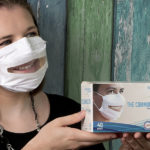
A clear face mask keeps a clinician’s expression visible during exactly the moments an emergency room patient needs reassurance most. ER encounters move fast, often involve patients in pain or fear, and frequently include diagnostic conversations that hinge on the patient understanding and answering questions accurately. A standard opaque mask strips away facial expression at the moment a patient is least equipped to fill in that missing information, while a clear face mask keeps the visual channel open alongside the verbal one.
Safe’N’Clear, Inc. supplies FDA cleared clear face masks through The Communicator™ Procedural Face Mask, available in ASTM Level 1 and ASTM Level 3 for the range of exposure risk an emergency department handles in a single shift. Emergency teams get infection-control performance and visible communication from one product, without treating the two as competing priorities during triage or trauma response. Surgical and procedural masks used in the ER fall under FDA oversight as medical devices, and an FDA cleared clear face mask gives a department the same regulatory assurance as any standard procedural mask already in use.
Why Communication Breaks Down in the ER
Emergency departments combine several conditions that make communication harder than in a routine clinical visit. Ambient noise from monitors, staff conversation, and other patients competes with a masked voice, muffling speech at the exact moment a patient needs to hear instructions clearly. Patients often arrive frightened, in pain, or disoriented, states that already reduce how well someone processes spoken information even without a mask in the way. Encounters are brief and rushed compared to a scheduled appointment, leaving less time to repeat or clarify a missed instruction before the next decision point in care.
Layering an opaque mask onto all three conditions removes facial expression and lip movement, two of the cues patients rely on most when audio alone is unreliable. A patient who cannot hear a muffled question clearly and cannot read lips to fill the gap is left guessing at critical information, whether that means understanding a discharge instruction or accurately answering a pain-scale question that shapes treatment. The stakes of a missed or misunderstood exchange in an ER setting are often higher than in a routine office visit, since decisions move faster and less built-in time exists to catch a misunderstanding before care is affected.
What Research Shows About Transparent Masks and Patient Trust
A randomized clinical trial published in JAMA Surgery compared standard covered masks to transparent masks during surgical clinic encounters and found that patients seen by a clinician wearing a transparent mask rated the interaction more positively, reported a clearer understanding of the provider’s explanations, and expressed greater trust in the provider. A related scoping review of mask communication research found the same pattern held across several studies, with transparent masks offering a particular benefit for patients with hearing loss and for settings where speech perception matters most.
Emergency medicine shares the same communication demands these studies examined, arguably under greater time pressure, which makes the trust and comprehension gains documented in scheduled clinical settings just as relevant to a fast-moving ER encounter.
Populations That Benefit Most in Emergency Settings
Several patient groups common to ER visits rely on facial cues more heavily than the general population. Patients who are Deaf or hard of hearing may depend on lip reading or facial expression to follow triage questions and treatment plans, especially when a sign language interpreter is not immediately available during a fast-moving intake. Elderly patients experiencing age-related hearing loss face similar difficulty parsing muffled speech through an opaque mask, a challenge that compounds when the same patient is also managing pain, medication effects, or unfamiliar surroundings. Pediatric patients, already frightened by an unfamiliar environment, respond to a visible, expressive face far better than a covered one, and a calm, readable expression can shorten the exam time needed for a scared child.
Patients experiencing acute confusion, intoxication, or psychiatric crisis also benefit from the added clarity a visible face provides during an already disorienting encounter. Non-English-speaking patients working with an interpreter, whether in person or by video, gain additional context from facial expression that supports the verbal interpretation happening in real time, particularly when the interpretation itself introduces a slight delay between question and response.
Choosing the Right ASTM Level for Emergency Care
Emergency departments handle a wide range of exposure risk within a single shift, from a low-acuity walk-in exam to an active trauma resuscitation. ASTM Level 1 covers routine intake, minor injury care, and low-risk exams, while ASTM Level 3 covers trauma response, wound care, and procedures with a meaningful risk of fluid, spray, or aerosol exposure. Stocking ASTM Level 1 alongside Level 3 lets an emergency department match filtration to acuity without switching mask brands or losing the clear window benefit at any point in a shift.
A charge nurse or infection control lead assigning mask levels by triage acuity gives staff a straightforward rule to follow rather than a judgment call at the bedside. Fast-track and low-acuity bays can standardize on Level 1, while trauma bays, procedure rooms, and any area handling active bleeding or airway management standardize on Level 3, keeping the protocol simple enough to follow consistently during a busy shift change.
Equipping an Emergency Department with Clear Face Masks
Emergency departments moving to a clear face mask standard can order ASTM Level 1 and ASTM Level 3 cases based on department volume and acuity mix. Case orders qualify for automatic savings, 10 percent off ASTM Level 1 cases and 11 percent off ASTM Level 3 cases, which helps a high-volume department control PPE spending while standardizing across triage, exam rooms, and trauma bays. The full Safe’N’Clear healthcare PPE line covers both filtration levels for departments planning a facility-wide switch. Reading more on how transparent masks affect patient trust offers additional context for teams building the case for a department-wide change.
Frequently Asked Questions About Clear Masks in the ER
Do clear face masks meet the same protection standards as standard ER masks? Yes. A clear window mask carries the same ASTM F2100 material testing as a standard opaque mask, so an ER team gets the same filtration and fluid-resistance performance with the added benefit of visible communication.
Which ASTM level is appropriate for trauma response? ASTM Level 3 is appropriate for trauma response and other high-exposure procedures involving significant fluid, spray, or aerosol risk, while ASTM Level 1 covers lower-acuity intake and exam encounters.
Do transparent masks actually improve patient understanding? Published research, including a randomized trial in JAMA Surgery, found that patients interacting with a clinician wearing a transparent mask reported clearer understanding of explanations and higher trust compared to a standard covered mask.
Bringing Visible Communication to the ER
An emergency department cannot control how frightened, confused, or hard of hearing a patient is on arrival, but the department can control whether a clinician’s face stays visible during the conversation that follows. The Communicator™ Mask brings FDA cleared, ADA effective protection to every acuity level an ER handles, from a routine exam to an active trauma response. Visit the Safe’N’Clear purchase guide to equip your department with the right level for every bay.