Deaf and hard-of-hearing professionals are working across healthcare, dental care, and other industries where masks and respiratory protection are part of the job. They are nurses, doctors, and surgeons. They are dental hygienists, dentists, and other dental professionals. They are technicians, educators, counselors, and therapists, as well as healthcare researchers, administrators, CFOs, CEOs, and so much more.
Safe‘N’Clear has featured many of these professionals, including Diane Bass, a Deaf nurse, and Dr. Christopher Moreland, a Deaf doctor. When workplaces require masks, communication becomes more challenging, and the challenge falls hardest on professionals who rely on seeing a colleague’s face.
The Barrier Created by Traditional Masks
For many visual communicators, including Deaf and hard-of-hearing people, communication is not based exclusively on sound. Facial expressions, lipreading, speechreading, body language, signing, writing, technology, and visual cues may all play a role. An opaque mask covering the lower half of the face blocks cues that can affect conversations. In healthcare, communication is not optional.
The Americans with Disabilities Act states that covered entities must communicate effectively with people who have communication disabilities, with the appropriate auxiliary aid or service depending on factors including the nature, length, complexity, and context of the communication. U.S. Department of Justice guidance lists examples of auxiliary aids and services for people who are deaf or have hearing loss, including qualified sign language and oral interpreters, real-time captioning, and written materials.
Deaf Professionals Belong in Every Field
An institution-created communication barrier should not become a career barrier. Deaf and hard-of-hearing people can pursue careers in healthcare, education, science, customer service, public safety, business, and other professional fields without choosing between workplace safety and communication. The professionals featured in the Safe‘N’Clear Deaf Leaders Series show what that looks like in clinical practice, from bedside nursing to medicine.
PPE Designed With People and Communication in Mind
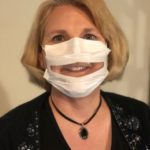
Clear-window masks help make facial information visible while a person is wearing a mask, but clear-window masks do not solve every accessibility need. Clear-window masks do not replace qualified interpreters when an interpreter is necessary. Clear-window masks are a part of a strategy that includes captions, written communication, assistive technology, or other accommodations.
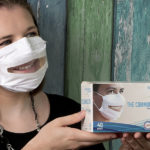
Safe‘N’Clear designs The Communicator™ for that strategy. The Communicator™ ASTM Level 1 procedural face mask and the ASTM Level 3 version are FDA cleared, made in the USA, and built with an anti-fog clear window, so a colleague’s lips and expressions stay visible during a shift.
We Have Your Back
The mission of Safe‘N’Clear is personal. Safe‘N’Clear was founded by Dr. Anne McIntosh, a member of the Deaf community. We support Deaf and hard-of-hearing staff so they can feel they have communication accessibility every time masks enter the conversation.
We support healthcare administrators, supply chain directors, purchasing agents, and charge nurses as they think about communication-accessible PPE. We work with PPE purchasing teams to ask whether their products are communication accessible. We want healthcare leaders to understand that infection control and accessibility can be addressed together. And we want Deaf and hard-of-hearing team members to know: we have your back.
Building a More Accessible Workplace for Deaf and Hard-of-Hearing Professionals
Building accessibility into a workplace starts with an honest look at current policies. Organizations can start by asking a short set of questions:
- What communication barriers do our PPE policies create?
- Do we have clear masks available when appropriate?
- Do employees know how to request communication accommodations?
- Are managers trained to recognize communication barriers?
- Are Deaf and hard-of-hearing employees included in conversations about workplace PPE?
Accessibility works best when built into the system, rather than added as an afterthought. The U.S. Department of Justice makes a similar point, calling comprehensive and ongoing staff training a critical and often overlooked part of effective communication, because good policies fail when frontline staff do not know how to carry them out.
The Future Where Safety and Communication Work Together Is Here Now
Safe‘N’Clear provides PPE that protects people without isolating them. We continue developing products, educational materials, and resources focused on the intersection of health, safety, and communication so healthcare systems can deliver superior care. Deaf and hard-of-hearing employees are engaged in the workplace, supporting your mission. You belong, and we have your back.
Explore Safe‘N’Clear’s clear communication products and accessibility resources. Visit the Safe‘N’Clear products page to equip your team, or contact Safe‘N’Clear to talk through accessible PPE for the Deaf and hard-of-hearing team members in your organization.