Deaf Awareness Month is observed each September in the United States to recognize Deaf culture, American Sign Language, and the achievements of Deaf and hard-of-hearing people. For healthcare teams, the month is a useful checkpoint, but the obligations behind the observance run all year. Hospitals and clinics must provide effective communication to Deaf patients and companions every day, and small habits at the front desk and bedside decide whether that happens. This guide explains where Deaf Awareness Month came from, how the 2026 International Week of Deaf People fits in, and five practical steps any care team can keep in place after September ends.
Key Takeaways
Deaf Awareness Month grew out of the International Day of the Deaf, first celebrated in 1958, and was established as a month in 1996 through the efforts of the National Association of the Deaf, according to a Texas House resolution. The World Federation of the Deaf set the 2026 International Week of Deaf People for September 21 to 27 under the theme Declaring Deaf People’s Human Rights. Under the Americans with Disabilities Act, hospitals must provide effective communication for patients, family members, and visitors who are deaf or hard of hearing, so awareness has to become standing procedure. Keeping faces visible with clear window masks is one of those procedures.
What Is Deaf Awareness Month?
Deaf Awareness Month is a September observance that promotes understanding of people who are deaf or hard of hearing and encourages greater support for them. A concurrent resolution in the 89th Texas Legislature traces the roots to the International Day of the Deaf, first celebrated in 1958, which later expanded into a weeklong commemoration of the first World Congress of the World Federation of the Deaf in Rome in September 1951. The same resolution credits the National Association of the Deaf with establishing Deaf Awareness Month in 1996. State agencies continue the tradition, and in September 2026 the Oklahoma Department of Rehabilitation Services described the month as a time to celebrate the history and achievements of Deaf and hard-of-hearing people and the importance of ASL.
Language matters during the month and after. In the same Oklahoma release, a program manager with the state’s Services for the Deaf and Hard of Hearing explained that a capital D in Deaf signals that a person considers themselves culturally part of the Deaf community. Lowercase deaf usually describes hearing status alone. Healthcare staff do not need to guess which term a patient prefers, because the simplest approach is to follow the patient’s lead and ask how they would like to communicate.
How the 2026 International Week of Deaf People Fits In
The International Week of Deaf People is the global observance inside Deaf Awareness Month. The World Federation of the Deaf scheduled the 2026 week for September 21 to 27 with the theme Declaring Deaf People’s Human Rights, and the federation notes that 2026 marks 20 years of the Convention on the Rights of Persons with Disabilities. The federation frames the theme as a call to make deaf people’s rights effective in every area of life, including access to public services. You can read the daily themes on the World Federation of the Deaf’s 2026 International Week page. For a hospital or clinic, public services include the scheduling line, the check-in desk, and the exam room, so the theme translates directly into daily operations.
Why Deaf Awareness Matters in Healthcare
Healthcare is one of the places where communication barriers carry the highest cost, because a missed instruction can affect a diagnosis, a medication, or informed consent. The U.S. Department of Justice states in ADA guidance for hospitals that hospitals must provide effective means of communication for patients, family members, and hospital visitors who are deaf or hard of hearing. The guidance also says hospitals should consult each person to determine which aids or services work and cannot charge an extra fee for interpreter services. Read the Department of Justice guidance on communicating with deaf and hard-of-hearing people in hospital settings.
Interpreters and Auxiliary Aids
Auxiliary aids are the tools and services a provider supplies so communication works, such as qualified sign language interpreters, note takers, captioned videos, and assistive listening systems. The Department of Justice guidance lists several of these and notes that an interpreter may be required even when the person who is deaf is a family member or companion rather than the patient. A Deaf parent of a pediatric patient, for example, needs the same access to discharge instructions that a hearing parent would receive.
Visual Access at the Bedside
Many Deaf and hard-of-hearing patients use lipreading and facial expression alongside other methods, and an opaque surgical mask removes both. A 2017 study in the Journal of the American Academy of Audiology tested speech understanding in background noise among 31 adults, including listeners with moderate and severe-to-profound hearing loss, while a talker wore conventional or transparent surgical masks. Listeners with hearing loss understood more speech when the talker wore a transparent mask, and the transparent mask did not reduce performance for anyone. Clear masks do not replace interpreters, but they keep the visual channel open between interpreted conversations.
Five Year-Round Actions for Healthcare Teams
The steps below turn a September observance into routine practice. Each one fits into existing workflows, and most require planning more than budget.
Ask How Each Patient Communicates
Record the patient’s preferred communication method at scheduling and confirm the preference at arrival. A Department of Justice settlement with Central DuPage Hospital required staff to consult patients who are deaf or hard of hearing about the aid or interpretive service they need and to keep notations of those services in the medical record. A note in the chart means the next nurse does not start from zero.
Build Interpreter Access Into Scheduling
Booking an interpreter at the same time as the appointment avoids delays at the desk. The Department of Justice guidance tells hospitals to develop protocols and train staff so employees know how to obtain interpreter services when needed. In another Justice Department settlement, a hospital agreed to tell patients and companions about their right to a qualified sign language interpreter, whether on-site or through video, so the patient’s preference should guide which option the team books.
Train Front-Line Staff
Reception, scheduling, and nursing staff handle most first contacts, so short practical training pays off quickly. Training can cover getting a person’s attention visually, facing the patient while speaking, writing down key details, and calling the interpreter service. Safe’N’Clear’s best practices for communicating with deaf and hard-of-hearing people cover these habits in more depth.
Keep Faces Visible
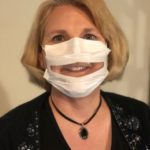
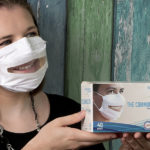
Clear window masks let patients see mouth movements and facial expressions while staff stay masked. Safe’N’Clear, Inc. supplies The Communicator™, an FDA-cleared, ADA-effective surgical face mask with a fog-resistant clear window, available in ASTM Level 1 and ASTM Level 3. On a unit where opaque masks block lipreading for every Deaf patient on the floor, The Communicator™ is a direct solution that keeps surgical mask protection in place. The Safe’N’Clear healthcare mask page explains which protection level fits each setting.
Learn From Deaf Professionals
Deaf clinicians, interpreters, and advocates are some of the best teachers on accessible care. Safe’N’Clear’s Deaf Leaders Series profiles Deaf professionals in medicine, dentistry, nursing, and other fields, and the stories make useful material for staff in-service sessions. Pair that reading with Safe’N’Clear’s look at communication inventions shaped by the Deaf community to show staff how Deaf innovators shaped tools many people use every day.
Conclusion: Make Deaf Awareness a Standing Practice
The September observance gives healthcare teams a reason to review how they communicate with Deaf and hard-of-hearing patients, and the work continues long after September. Ask each patient how they communicate, book interpreters with the appointment, train front-line staff, and keep faces visible. When your team needs masks that keep mouths visible without lowering protection, shop The Communicator™ clear window surgical masks in ASTM Level 1 or ASTM Level 3, with automatic savings when you order by the case.