Communicating with deaf patients at the front desk starts before the patient arrives. Note the patient’s preferred communication method when the appointment is booked, arrange any interpreter in advance, and make sure every staff member at check-in knows how to get a patient’s attention visually and keep their face in view. The front desk sets the tone for the whole visit. When check-in goes smoothly, the Deaf patient reaches the exam room informed and ready, and clinical staff spend less time sorting out communication. This guide walks through each front-desk moment, from scheduling to the waiting room callout.
Key Takeaways
Under the Americans with Disabilities Act, hospitals must provide effective communication wherever patients, companions, and the public interact with staff, and that includes reception. Department of Justice settlements have required providers to determine needed aids when an appointment is scheduled or at arrival and to record those services in the chart. Visual attention-getting, written notes for brief exchanges, and visual or text callouts keep check-in moving. Clear window masks keep front-desk staff understandable when masks are required.
Why the Front Desk Matters for Deaf Patients
The front desk is usually the first point of contact, so communication problems that start there follow the patient through the visit. The U.S. Department of Justice states that wherever patients, their family members, companions, or members of the public interact with hospital staff, the hospital is obligated to provide effective communication. The same guidance tells hospitals to consult each person about the aids or services that work, to avoid charging extra fees for interpreter services, and to train staff so employees know how to obtain interpreters and other aids. Read the Department of Justice guidance for hospital settings.
Before the Visit: Scheduling and Interpreter Requests
Planning at scheduling prevents most check-in problems. A Department of Justice settlement agreement with St. James hospitals required that the needed auxiliary aids and services be determined when an appointment is scheduled for a patient known to be deaf or hard of hearing, or on the patient’s arrival, whichever comes first. A separate settlement with Central DuPage Hospital required staff to consult deaf and hard-of-hearing patients about the aid or interpretive service they need and to keep notations of those services in the medical record.
For front-desk teams, that means building a few habits into scheduling. Ask every new patient how they prefer to communicate, flag the preference in the scheduling system and chart, and book an interpreter at the same time as the appointment when the patient requests one. Offering text or email for scheduling changes also helps patients who do not use voice calls. Safe’N’Clear’s guide on preparing medical providers to treat deaf and hard-of-hearing patients covers more of the pre-visit steps.
At Check-In: Getting Attention and Sharing Information
Getting a Deaf patient’s attention visually is the first check-in skill. The Student Academy of Audiology lists gaining attention as the first communication strategy and notes that comprehension increases when the listener can see the speaker’s face. A wave within the patient’s line of sight works better than calling out a name, and speaking only after the patient is looking keeps the first words from being lost.
Written communication works well for brief routine exchanges such as confirming a birth date or an insurance card, and EEOC guidance lists written notes among accommodations for short, simple communications. Longer conversations about symptoms, consent, or billing disputes call for the communication method the patient chose, such as a qualified interpreter. Front-desk staff should know where the interpreter request process lives and how long a video remote interpreting connection takes to set up.
In the Waiting Room: Callouts Without Sound
Calling a name across the waiting room does not work for a patient who cannot hear the call. Practical alternatives include walking over to the patient, using a visual display or pager, or sending a text message when the room is ready. EEOC guidance describes a similar fix in the workplace, where an employer provided a smartphone so a deaf employee received text messages instead of public address announcements. The goal is the same in a clinic, so the patient never misses a turn because the system depended on sound.
Masks at the Front Desk
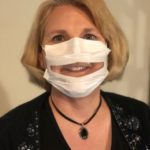
When reception staff wear opaque masks, patients who lipread lose the visual information they rely on. A 2017 study in the Journal of the American Academy of Audiology found that listeners with hearing loss understood more speech in background noise when the talker wore a transparent surgical mask, and the transparent mask did not lower understanding for listeners with normal hearing. Safe’N’Clear, Inc. supplies The Communicator™, an FDA-cleared, ADA-effective surgical face mask with a fog-resistant clear window in ASTM Level 1 and ASTM Level 3. For a reception desk that must stay masked, The Communicator™ keeps every greeting and instruction visible. The Safe’N’Clear healthcare mask page explains which level fits a front-desk setting.
When the Interpreter Has Not Arrived
Delays happen, and the response matters. In a Department of Justice settlement with Dominion Hospital, the United States found that the hospital violated the ADA by relying on a patient’s companion to facilitate communication after a scheduled interpreter failed to appear. In another Justice Department agreement announced in a department press release, a hospital agreed to advise patients and companions of their right to a live qualified sign language interpreter, whether through video or on-site, and to assess communication needs throughout the visit. Front-desk staff should know the backup plan, such as video remote interpreting, and should not ask family members to interpret. Safe’N’Clear’s article on a medical interpreter’s review of The Communicator™ shows how clear masks and interpreters work together.
Conclusion: Make Communicating With Deaf Patients Part of Check-In
Communicating with deaf patients well at the front desk comes down to preparation and a few visual habits: record preferences at scheduling, book interpreters early, get attention visually, use writing for brief details, replace audio callouts, and keep faces visible. Each step reduces delays and builds trust before the clinical visit begins. To equip your reception team with clear window masks, review box and case options in the Safe’N’Clear purchase guide. How The Communicator™ Masks Improve Patient Experience in Healthcare covers the broader topic in more depth.