College campuses serve Deaf and hard-of-hearing students across lecture halls, laboratories, campus health centers, and advising offices, each with its own communication demands and its own risk of a standard mask becoming a barrier rather than a simple safety measure. Unlike a single K-12 classroom, a college student moves through a full campus of departments in a single day, meaning a masking policy that works in one building may create a real access problem in another. This guide covers how clear masks support Deaf and hard-of-hearing students across the range of settings a college campus includes.
Safe’N’Clear, Inc. supplies FDA cleared clear masks through The Communicator™ Procedural Face Mask, giving colleges and universities a way to support communication access across campus health services, academic departments, and student-facing offices alike.
How Higher Education Disability Services Differ from K-12
College disability services operate under a different framework than the K-12 special education system most students and families are familiar with. The U.S. Department of Education’s guidance on auxiliary aids for postsecondary students explains that colleges must analyze the appropriateness of an accommodation in its specific context, since the type of support a Deaf or hard-of-hearing student needs in a large lecture hall differs from what the same student needs in a small seminar with two-way discussion.
Unlike K-12, where a school district develops an IEP proactively, college students are generally responsible for self-identifying to a campus disability services office and requesting accommodations directly. That shift in responsibility means a student who benefited from a clear mask accommodation throughout K-12 may need to actively request the same support again once they reach a college campus, since the accommodation does not automatically transfer between institutions.
This self-advocacy requirement catches many incoming students by surprise, particularly first-generation college students or those whose families managed the accommodation process for them throughout K-12. A student arriving on campus without understanding this shift may go weeks or an entire semester before connecting with disability services, missing out on accommodations they were entitled to from day one. Colleges that proactively communicate this process during orientation, rather than waiting for a student to discover the disability services office on their own, close that gap more effectively than institutions relying on students to figure out the system independently.
Where Communication Barriers Show Up on Campus
Large lecture courses present a particular challenge, since a masked professor speaking to a room of a hundred or more students offers little opportunity for a Deaf or hard-of-hearing student to ask for repetition or clarification in the moment. Smaller seminar courses involve more back-and-forth discussion, where multiple masked speakers across a room compound the difficulty of following a fast-moving conversation. Laboratory courses add another layer, since instructions for equipment use or safety procedures often happen in a noisy lab environment where precise understanding matters for safety, not just comprehension.
Campus health centers see students for both routine and urgent care, often involving the same sensitive, detailed conversations any healthcare setting requires, layered on top of the general communication barriers a college student already navigates elsewhere on campus. Academic advising, career services, and financial aid offices round out the list of campus touchpoints where a Deaf or hard-of-hearing student needs clear communication to make decisions that affect their education and finances.
Office hours and one-on-one meetings with professors present a somewhat different challenge than the lecture hall setting, since these conversations tend to be quieter and more focused, but a masked instructor still removes the visual cues a Deaf or hard-of-hearing student relies on to fully follow detailed academic feedback or research guidance. Residence life staff, campus security, and dining services also interact with students daily in less formal but still important exchanges, and a Deaf or hard-of-hearing student navigating campus life depends on clear communication in these everyday interactions just as much as in the classroom.
The Legal Framework: Section 504 and ADA in Higher Education
Colleges and universities operate under both Section 504 of the Rehabilitation Act and the Americans with Disabilities Act, though the specific title of the ADA that applies depends on whether an institution is public or private. Public colleges fall under Title II, while private colleges fall under Title III, and both are also generally subject to Section 504 if they receive any federal financial assistance, which covers the large majority of postsecondary institutions in the United States. The National Deaf Center’s summary of these accessibility laws confirms that these overlapping laws work together to protect Deaf and hard-of-hearing students from exclusion and unequal treatment across every part of campus life, not classroom instruction alone.
This legal framework gives campus disability services offices, health centers, and academic departments a shared obligation to consider communication access, even though the specific department managing that obligation varies by context.
How Clear Masks Support Campus Accommodation Plans
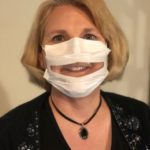
A clear window mask functions as one practical auxiliary aid among several a Deaf or hard-of-hearing student might use, alongside sign language interpreters, real-time captioning, and note-taking support. Unlike those services, which typically require advance scheduling and coordination, a clear mask offers an immediate, low-barrier communication benefit available in any interaction, from a quick question after class to an unplanned visit to the health center. The Gallaudet University Student Health Service, a Deaf-serving institution built around barrier-free communication from the ground up, demonstrates what a fully accessible campus health model looks like. Most colleges and universities serve a smaller number of Deaf and hard-of-hearing students within a larger hearing student body, making the practical, immediate accessibility of a clear mask especially valuable in mainstream higher education settings that lack Gallaudet’s institution-wide communication infrastructure.
Equipping Campus Health Centers and Academic Departments
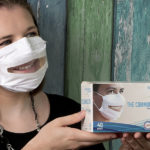
Campus health centers handling routine visits and consultations are well served by ASTM Level 1, covering the majority of student health encounters without unnecessary cost. Academic departments with lab courses involving instructors who move between demonstration and close student interaction benefit from the same clear window design, keeping instructional communication accessible regardless of the specific course or discipline. The Safe’N’Clear education page covers the full Communicator™ line for campus settings, and a broader look at accessible classroom masks offers additional context that applies across K-12 and higher education alike.
Frequently Asked Questions About Clear Masks in Higher Education
Do college students need to request mask accommodations differently than K-12 students? Yes. College students generally self-identify to a campus disability services office and request accommodations directly, rather than having a school district develop a plan proactively as happens under K-12 special education.
Does the ADA apply differently to public and private colleges? Yes. Public colleges fall under Title II of the ADA, while private colleges fall under Title III, and most institutions are also subject to Section 504 if they receive federal financial assistance.
Where on campus do clear masks make the biggest difference? Clear masks help across lecture halls, seminars, laboratories, campus health centers, and student-facing offices like advising and financial aid, anywhere a Deaf or hard-of-hearing student needs to follow spoken communication accurately.
Supporting Communication Access Across Every Campus Setting
A college campus includes far more communication touchpoints than a single classroom, and Deaf and hard-of-hearing students deserve consistent access across all of them, not just the spaces with formal accommodation plans in place. The Communicator™ Mask brings FDA cleared, ADA effective protection to lecture halls, labs, health centers, and administrative offices alike. Visit the Safe’N’Clear purchase guide to equip your campus for accessible communication everywhere students need support.