
Home » Can Deaf People Be Nurses? What the Profession Looks Like in Practice
Can deaf people be nurses? Deaf and hard-of-hearing people already work in nursing roles from certified nursing assistant to nurse practitioner, including in intensive care units. Federal guidance from the U.S. Equal Employment Opportunity Commission (EEOC) says employers should judge an applicant with a hearing disability on skills and experience, not on stereotypes about deafness. The obstacles have been practical, such as hearing a heartbeat or reading a colleague’s lips behind a surgical mask. This article explains how Deaf nurses practice, which accommodations they use, and why a change to the surgical mask removed one of the oldest barriers to the profession.
Deafness alone does not keep a person out of nursing, and Deaf registered nurses work in settings as demanding as the surgical ICU. These nurses rely on interpreters, captioning, specialized stethoscopes, and coworkers in clear window masks. EEOC guidance allows an employer to exclude a nurse with a hearing disability for safety only after an individualized assessment finds a direct threat. Opaque surgical masks helped justify rejecting a Deaf nursing applicant in 1976, which explains why visible-mouth masks matter to Deaf clinicians.
Deaf people can be nurses, and many are. Casey King, RN, profiled by The Ohio State University Wexner Medical Center in July 2024, works in a surgical intensive care unit after becoming the first deaf nursing student to graduate from Capital University in June 2023. Cleveland Clinic has profiled Marissa Pusateri, BSN, RN, an ICU nurse at Cleveland Clinic Hillcrest Hospital who has lived with profound bilateral hearing loss for most of her life. Diane Bass, a Deaf nurse featured by Safe’N’Clear, moderates a Facebook group for nursing professionals across the spectrum of deafness, with members ranging from certified nurse assistants to nurse practitioners.
Nursing has room for Deaf professionals because communication can travel through more than one channel. A reasonable accommodation is an adjustment to a job or work environment that lets a qualified person with a disability do the work, unless the change would cause undue hardship, meaning significant difficulty or expense. For a Deaf nurse, that might be an interpreter or a stethoscope that pairs with a cochlear implant. See how working nurses combine these tools in Safe’N’Clear’s feature on Deaf and hard-of-hearing nurses in healthcare.
The most cited case on this question began in North Carolina. Frances Davis, already licensed as a practical nurse, applied to the Associate Degree Nursing program at Southeastern Community College. An audiologist’s report found that, even with a hearing aid, she could understand speech only through lipreading. The college rejected her application, and Davis sued under Section 504 of the Rehabilitation Act of 1973.
The federal district court ruled for the college in 1976. Among the reasons, the court found that in operating rooms, intensive care units, and post-natal units, doctors and nurses wear surgical masks which would make lip reading impossible. On June 11, 1979, the U.S. Supreme Court held in Southeastern Community College v. Davis that the college had not violated Section 504, while noting that technological advances could change the analysis in future cases. Those advances arrived. In the Ohio State profile, Casey King’s interpreter and sometimes her coworkers wear face masks with clear plastic around the mouth so she can read their lips. The barrier the court described was the mask, not the nurse.
Deaf and hard-of-hearing nurses combine people, devices, and workplace adjustments rather than relying on one tool. EEOC guidance stresses that not every employee with a hearing condition needs an accommodation, and those who do may need different ones.
Sign language interpreters, in person or through video remote interpreting, lead the EEOC’s list of accommodations for hearing disabilities. The same guidance names communication access real-time translation (CART), captioning software, assistive listening devices, and written notes for brief routine exchanges. At Ohio State, an interpreter accompanies Casey King into patient rooms throughout 12-hour shifts.
Auscultation, listening to the body with a stethoscope, is the skill people question first. During her training, Diane Bass offered her amplified stethoscope when a standard model could not pick up a faint heart murmur, and the amplified stethoscope detected the murmur. Casey King uses a digital stethoscope that connects by Bluetooth to her cochlear implant, though the connection occasionally fails and she then asks a coworker to listen. The Association of Medical Professionals with Hearing Losses (AMPHL) publishes a stethoscope comparison table for clinicians.
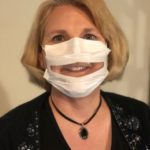
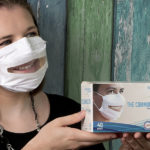
Lipreading works only when the mouth is visible, so coworkers’ masks matter as much as the nurse’s own equipment. For a Deaf nurse who reads lips, a unit full of opaque masks is a communication barrier, and a clear window mask is the direct fix. Safe’N’Clear, Inc. supplies The Communicator™, an FDA-cleared and ADA-effective surgical face mask with a clear window, available in ASTM Level 1 and ASTM Level 3, so nurses and their colleagues can keep mouth movements and facial expressions visible while masked. A clear mask supports lipreading but does not replace a requested interpreter. The Safe’N’Clear healthcare mask protection page explains where each protection level fits.
The EEOC resource Hearing Disabilities in the Workplace and the Americans with Disabilities Act, issued January 24, 2023, explains how the ADA applies to applicants and employees who are deaf or hard of hearing. Title I of the ADA covers private employers with 15 or more employees and state and local governments. Before a job offer, an employer may not ask whether an applicant uses a hearing aid or has a cochlear implant, though the employer may ask whether the applicant can perform the essential functions of the job. Read the details in the EEOC’s hearing disabilities guidance.
A direct threat, in EEOC terms, is a significant risk of substantial harm to the individual or others that cannot be eliminated or reduced through reasonable accommodation. An employer must base that finding on an individualized assessment, not on myths or fears. Nursing schools differ, because the Davis decision lets clinical programs set reasonable physical qualifications, so ask each program about technical standards and accommodations. This section is general information, not legal advice.
Many people assume deafness rules out clinical work. In the United Kingdom, a YouGov poll of 2,176 people commissioned by the National Deaf Children’s Society, published in February 2023, found that 45 percent were not confident deaf people could work as nurses. Diane Bass started her nursing Facebook group after an instructor claimed there were no Deaf or hard-of-hearing people in nursing. AMPHL’s board page describes Nicole Fleming, BSN, RN, a pediatric-focused nurse who became Deaf during college and mentors aspiring Deaf nurses. Read more in Safe’N’Clear’s profile of Nicole Fleming and the Deaf Leader Series feature on Diane Bass.
Deaf and hard-of-hearing nurses typically use amplified or digital stethoscopes. Diane Bass detected a faint heart murmur with an amplified stethoscope after a standard model missed the sound during her training. Casey King uses a digital stethoscope that streams sound by Bluetooth to her cochlear implant. AMPHL, the Association of Medical Professionals with Hearing Losses, publishes a comparison table to help clinicians choose.
EEOC guidance lists a sign language interpreter, in person or through video remote interpreting, as a reasonable accommodation an employer may need to provide for an employee with a hearing disability, unless doing so would cause undue hardship. When several accommodations would work, the employee’s preference gets primary consideration, but the employer may choose an effective, less costly option.
A surgical mask with a clear window keeps the wearer’s mouth and facial expressions visible, which lipreading requires. In a hospital, the masks worn by coworkers and interpreters matter as much as the nurse’s own. The Communicator™ from Safe’N’Clear is an FDA-cleared surgical face mask with a clear window, offered in ASTM Level 1 and ASTM Level 3.
Deaf people can be nurses, and Deaf nurses practice today in ICUs and pediatrics with interpreters, specialized stethoscopes, and clear communication from the people around them. The barrier a court described in 1976 was a mask that hid the mouth, and that barrier now has a direct solution. If your unit employs or trains Deaf and hard-of-hearing nurses, outfitting the whole team with clear window masks is one of the simplest accommodations available. Shop The Communicator™ surgical masks with a clear window in ASTM Level 1 or ASTM Level 3, and save automatically when you order by the case.