National Audiology Awareness Month takes place every October, when the American Academy of Audiology encourages the public and other healthcare providers to learn about audiology and the importance of identifying and treating hearing and balance disorders. October is also National Protect Your Hearing Month. For audiology clinics, the month is a good time to ask a basic question: can every patient understand the people helping them? Many audiology patients rely on seeing a speaker’s face, so the masks worn at the front desk, in the test booth, and during device fittings shape every appointment.
Key Takeaways
The American Academy of Audiology uses October to raise awareness of audiology and hearing protection, and the Academy states that lengthy or repeated exposure to noise above 85 decibels can damage hearing. Audiology students are taught that comprehension increases when a listener can see the speaker’s face. A 2017 study in the Academy’s own journal found that listeners with hearing loss understood more speech in noise when the talker wore a transparent surgical mask. Clear window masks let audiology staff stay masked without hiding the visual cues their patients depend on.
What Is National Audiology Awareness Month?
National Audiology Awareness Month is an October observance led by the American Academy of Audiology to increase public awareness of audiology and the importance of hearing protection. The Academy encourages audiologists to spend the month educating the public and other healthcare providers about identifying and treating hearing and balance disorders, as described in an American Academy of Audiology president’s message. October also carries National Protect Your Hearing Month, which the Academy uses to promote hearing protection. In a 2022 media template for members, the Academy states that lengthy or repeated exposure to noise above 85 decibels can damage hearing.
Why Visual Cues Matter in Audiology Appointments
Audiology patients often have the most difficulty with sound, so visual cues carry more weight in their appointments than in almost any other clinic. The Student Academy of Audiology, part of the American Academy of Audiology, reminds future audiologists that comprehension increases when the listener can see the speaker’s face. The same guidance advises speaking toward a patient’s better ear, avoiding shouting or exaggerated slow speech, and rephrasing instead of repeating when a patient misses something.
Research backs that advice. In a 2017 study in the Journal of the American Academy of Audiology, researchers tested speech understanding in background noise with 31 adults, including ten listeners with normal hearing, ten with moderate sensorineural hearing loss, and ten with severe-to-profound hearing loss, using conventional and transparent surgical masks. Both groups with hearing loss benefited from the visual input of the transparent mask, and the transparent mask did not reduce performance in noise. An editorial in the same issue noted that participants with severe hearing impairment benefited most. Read the study abstract in the Journal of the American Academy of Audiology.
Where Masks Create Barriers in an Audiology Clinic
Audiology visits involve a series of conversations, and an opaque mask affects each one. The sections below outline where those conversations happen and why visibility matters at each step.
Check-In and Case History
The visit begins with scheduling questions, forms, and a case history about the patient’s hearing and daily life. A patient who already struggles to hear may miss key questions if the staff member’s mouth is hidden, and incomplete history can shape the rest of the appointment. Visible faces at the desk and in the history interview make the first part of the visit more accurate.
Results and Counseling
Explaining test results and treatment options is often the most important conversation of the visit. Patients need to understand what an audiogram shows, which options exist, and what happens next. When the audiologist’s mouth is visible, the patient can combine whatever hearing remains with lipreading and facial expression to follow the discussion.
Device Fittings and Orientation
Hearing aid and cochlear implant appointments include detailed instructions on insertion, cleaning, batteries or charging, and settings. Those instructions often happen while a device is out of the patient’s ear or still being adjusted, which is exactly when the patient hears least. A visible mouth lets the patient follow along during the moments when sound alone is unreliable.
Clear Window Masks for Audiology Clinics
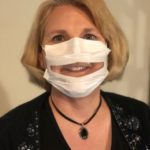
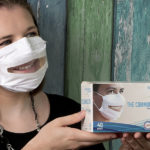
Safe’N’Clear, Inc. supplies The Communicator™, an FDA-cleared, ADA-effective surgical face mask with a fog-resistant clear window, available in ASTM Level 1 and ASTM Level 3. For audiology clinics where an opaque mask hides the mouth from patients who need to see speech, The Communicator™ is a direct solution that keeps staff masked and patients informed. Safe’N’Clear’s message to audiologists about changing the way they communicate explains the clinic case in more detail, and the Deaf Leaders Series has profiled Deaf audiologist Michelle Hu and educational audiologist Tina Childress.
Ways to Mark the Month in Your Clinic
Clinics can use October to improve communication for every patient, not only those with the most severe hearing loss. Review whether front-desk and clinical staff can be understood by patients who rely on lipreading, and stock clear window masks where masks are required. Share hearing protection guidance with patients during National Protect Your Hearing Month, using the Academy’s statement on noise above 85 decibels as a starting point. Refresh staff on the Student Academy of Audiology communication strategies, because habits such as rephrasing instead of repeating cost nothing and help immediately.
Frequently Asked Questions
When is National Audiology Awareness Month?
The observance takes place every October. The American Academy of Audiology uses the month to increase public awareness of audiology and hearing protection, and October also carries National Protect Your Hearing Month. Clinics can pair the two observances with hearing protection education and a review of how well patients follow communication in the clinic.
Do clear masks help patients who wear hearing aids?
Clear window masks help many patients with hearing loss because the speaker’s mouth stays visible. In a 2017 study in the Journal of the American Academy of Audiology, listeners with moderate and severe-to-profound hearing loss understood more speech in background noise when the talker wore a transparent surgical mask. Hearing aids improve access to sound, and a visible mouth adds the visual information that sound alone leaves out.
Conclusion: Let Patients See What You Say
Audiology Awareness Month is a reminder that hearing care depends on communication, and communication in an audiology clinic depends heavily on what patients can see. Visible faces support accurate histories, clearer counseling, and better device orientation. To give your clinic team masks that keep mouths visible, shop The Communicator™ clear window masks and save automatically when you order by the case. Facilities comparing options can review Safe’N’Clear’s clear-window mask protection for healthcare.